
If you’re searching for the best AI music generator, you’re probably trying to balance speed, quality, and how personal the result feels. The truth is that “best” changes depending on your goal: a creator exploring ideas needs different features than a buyer trying to make an emotional gift for someone they love.
AI music tools are brilliant for fast drafts, mood exploration, and creative momentum. But when the moment is personal—a birthday, anniversary, wedding, or tribute—the quality test is not just technical. It is emotional relevance: does this feel like their story, not a generic track?
This guide gives you a practical comparison framework so you can choose the right path quickly. You’ll learn what to look for, where AI generators help most, and when a personalised song workflow is the smarter option for a meaningful final result.
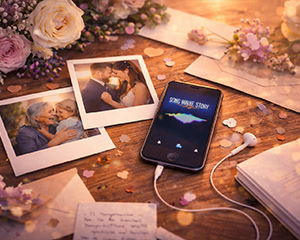
How to decide what “best AI music generator” means for you
A lot of people compare tools by hype or social clips. A better method is to define success before you compare features.
Start with your outcome
Are you trying to brainstorm beats, produce tracks for content, write a song with lyrics, or create a personal gift? The same model can feel amazing for ideation and disappointing for emotional storytelling. Your outcome should control your choice.
Score tools against five practical criteria
- Speed: How quickly can you get a usable first result?
- Control: Can you shape genre, tone, pace, and structure?
- Originality: Do results feel fresh or repetitive?
- Usability: Is the workflow clear for non-producers?
- Emotional fit: Can it represent a real person or relationship meaningfully?
This framework helps you avoid “feature overload” decisions and focus on whether the output actually serves the moment you care about.
Where AI music generators are strongest
AI tools shine when you need momentum. Instead of staring at a blank project, you can generate ideas, test styles, and hear instant direction.
Fast creative exploration
If you are not sure whether a track should be cinematic, acoustic, upbeat, or reflective, AI lets you sample options quickly. This is ideal for creators and marketers who need concept drafts.
Low-friction experimentation
You can compare arrangement styles and tempo ranges in minutes instead of hours. For early-stage work, this speed is often the biggest value multiplier.
Accessible entry point
Beginners can start with prompts rather than music theory. That lowers the confidence barrier and helps people participate creatively even without formal production skills.
For these reasons, AI music generators are often the best first step for idea generation and rough concepting.

Common limitations you should expect before choosing one
Even strong AI generators have predictable limits. Knowing these early helps you decide faster and reduce disappointment.
Generic emotional tone
AI can produce polished sound, but emotionally specific storytelling is still hard. If your song needs to reference shared memories, private jokes, relationship milestones, or family context, generic generation often feels broad.
Iteration fatigue
It is easy to run 20 generations and still feel undecided. More options do not always equal better outcomes. Without a clear brief, iteration can become noise.
Unclear final-readiness
Many users can produce something “interesting,” but are unsure when it is truly gift-ready. That confidence gap matters when a song is attached to an important event.
Licensing and usage confusion
Some platforms have different rules across free and paid tiers. Before finalising anything, check usage terms, download rights, and whether your intended use is covered.
When Song Wave Story is the better choice than DIY generation
If your goal is a meaningful finished song for one specific person, Song Wave Story is often a better fit than chasing endless prompt variations. The process focuses on emotional signal, not just sonic output.
You provide context—who the song is for, the story, the tone, and the moment. The outcome is designed to feel personal and intentional. That makes a major difference for weddings, anniversaries, milestone birthdays, and tributes.
Song Wave Story also supports preview-before-payment, which reduces risk. Instead of guessing if your final track will land emotionally, you can assess direction and confidence before committing.
Best-fit scenarios
- You need a polished song quickly for an upcoming date
- You are a thoughtful gift buyer, not a music producer
- You want personalised detail without technical overwhelm
- You care more about emotional impact than endless editing controls
A practical 20-minute decision process
If you are still undecided, run this simple process:
- Write one sentence describing the moment and recipient.
- Generate two quick AI drafts for style discovery.
- Ask: “Does this sound personal enough to give confidently?”
- If yes, continue DIY. If no, move to a personalised song workflow.
This avoids overthinking and keeps momentum. The key is choosing based on purpose, not just novelty.
Mistakes to avoid when comparing AI music generators
The most common mistake is choosing a tool because it is popular, not because it fits your use case. A creator making social snippets has different needs than someone preparing a once-only gift for a parent, partner, or friend. Define context first, then compare.
Another mistake is judging only the first output. Good evaluation means testing prompt quality, style consistency, and how well the tool responds to direction changes. A generator that seems average on the first try might become excellent with clearer prompts. Equally, a flashy first result can collapse when you ask for emotional specificity.
Finally, do not ignore the “confidence test.” Ask yourself whether you would proudly share this song today. If the answer is no, switching workflows early can save hours. The right system is the one that gets you to a meaningful finished result, not just endless possible drafts.
FAQ: best AI music generator
What is the best AI music generator for beginners?
The best option is the one that gives you usable output quickly with a simple interface. Speed to first meaningful result matters more than advanced controls when starting out.
Are AI music generators good for personalised gifts?
They can help with inspiration, but fully personal gift outcomes often require stronger emotional direction than generic prompt tools provide by default.
Can I get professional quality from AI music tools?
You can get strong drafts and polished ideas, but final quality depends on your brief quality, editing judgment, and whether the output needs deep personal context.
Should I use one generator or combine multiple?
Start with one to avoid workflow chaos. If needed, add a second tool for specific tasks like lyrics, arrangement, or mastering support.
Is Song Wave Story only for major occasions?
No. It works for big milestones and smaller “just because” moments where a personal song says more than a generic gift.
Final verdict: choose by emotional outcome, not just tool power
The best AI music generator is the one that matches your real objective. For rapid ideation and creative exploration, AI tools are excellent. For emotionally specific songs that need to feel personal and gift-ready, a personalised workflow like Song Wave Story is often the stronger path.
If you want to create something meaningful without spending days in technical edits, start with Create my song or hear examples at Song Wave Story demos and choose the direction that feels right for your moment.