
If you are searching for online tools for creating music, you are probably trying to do one of three things: make your first song quickly, improve your existing workflow, or create something personal without expensive studio gear. The good news is that modern browser-based music tools can handle composition, lyrics, arrangement, collaboration, and even fast demo production.
The challenge is not access anymore. The challenge is choosing the right tool for your goal. Many people lose momentum by testing random platforms without a plan. They spend hours switching interfaces and still finish with no complete track.
This guide gives you a practical framework to choose online music tools by use case, skill level, and output quality. Whether you are a beginner, songwriter, content creator, or gift buyer exploring personalised music, these recommendations will help you decide faster and create better results.

Start with your real goal before choosing a platform
Before opening any tool, define your target outcome clearly. Are you producing a full release-ready track, writing lyrics and melody ideas, creating background music for social content, or building a meaningful song for someone special? Different goals need different tool strengths.
A simple way to avoid decision paralysis is to pick one “primary workflow” and one “support workflow.” For example: primary tool for arranging and exporting, support tool for lyric drafting or vocal ideas. This keeps your process focused and prevents platform hopping.
Best online music tools for beginners who need fast progress
If you are new to music creation, prioritise low-friction interfaces with built-in templates. Beginner-friendly tools usually provide loop libraries, guided chord progression options, and drag-and-drop arrangement so you can hear progress immediately. Early wins matter more than deep feature sets at this stage.
Look for tools with clear timelines, auto-tempo matching, and simple export options. Avoid platforms that require heavy setup before first sound output. Your first objective should be completing one short song idea from start to finish, not mastering every production concept in week one.
Online tools for songwriting and lyric development
Songwriting-focused tools are different from production-heavy DAWs. They help you capture structure, hooks, rhyme patterns, and concept flow quickly. If your priority is message and melody rather than mixing precision, choose tools that make lyric organisation and section planning easy.
A strong approach is to keep a lyric workspace separate from your arrangement space. Draft verses, chorus options, and bridge ideas first, then move your strongest lines into your composition tool. This separation improves writing quality because you are not distracted by plugins and sound design while shaping words.
Online DAWs for arrangement, layering, and collaboration
When your ideas are ready, an online DAW can help you turn concepts into full arrangements. The best options provide multitrack editing, MIDI support, basic effects, automation, and cloud saving. For many creators, browser-based DAWs are now strong enough for polished demos and content-ready tracks.
Collaboration features are a major advantage here. If you co-write with friends, bandmates, or clients, cloud sessions can remove file transfer friction. Shared project links and version history also reduce confusion when multiple people are editing the same song.
AI-assisted music tools: where they help and where they do not
AI music tools can be excellent for idea generation, rough drafts, and speed when you are stuck. They can suggest chord progressions, lyrical phrasing directions, or style references quickly. For creators under time pressure, this can shorten the gap between blank page and workable concept.
But AI outputs still need human direction if you want emotional specificity. Generic prompts often produce generic results. The best outcomes come when you provide clear context, mood, story details, and constraints. Use AI as a co-pilot for momentum, not a replacement for your creative point of view.

How to choose the right online tool stack in 15 minutes
Use this quick decision model before committing to any platform:
Step 1: Define your output (demo, full song, gift track, social clip).
Step 2: Choose your primary task (writing, arranging, producing, collaborating).
Step 3: Pick one core tool and one supporting tool only.
Step 4: Test with a single 60-second project.
Step 5: Evaluate speed, clarity, and final sound confidence.
This method prevents endless testing and helps you commit to tools that actually fit your workflow.
Common mistakes when using online music tools
The most common mistake is chasing features instead of finishing songs. Many creators spend more time building plugin chains than writing memorable hooks. Another mistake is ignoring export quality early, then realising too late that the final file does not suit the intended platform or playback context.
A third mistake is skipping project organisation. Name versions clearly, save lyric iterations, and keep stems grouped logically. Good file hygiene is boring but saves huge amounts of time when you return to a project after a week or hand it to someone else.
When a guided custom song service is the smarter option
Sometimes your goal is not “become a producer.” Sometimes your goal is “create a powerful song for a birthday, wedding, anniversary, or tribute without spending weeks learning software.” In those cases, guided custom creation can be the better route.
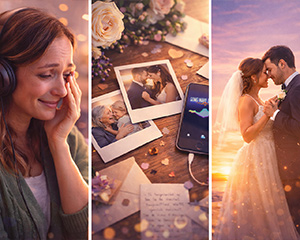
Song Wave Story is built for this exact use case. You provide the personal story, tone, and occasion details, then receive a personalised song crafted around your message. This is especially useful for gift buyers who want emotional impact and polished output without the steep learning curve of full music production.
Why personalised music tools are growing faster
Traditional music software serves creators building tracks for release, content, or performance. Personalised music services serve a different need: emotional storytelling for real life moments. That includes partner gifts, family milestones, and meaningful celebrations where personal relevance matters more than technical complexity.
This is why many people now combine both worlds. They use online tools for experimentation and personal learning, then use a dedicated personalised music service when the occasion is high stakes and the song must land emotionally the first time.
FAQ: Online tools for creating music
Do I need paid software to create good music online?
Not always. Many online tools offer free or low-cost tiers that are enough for songwriting, demos, and simple production. Paid plans usually add advanced editing, higher export quality, and expanded libraries.
What is the best online tool for beginners?
The best beginner tool is one with a simple interface, quick setup, and clear workflow to complete a first track fast. Ease of finishing matters more than advanced feature depth at the start.
Can I collaborate on songs entirely online?
Yes. Many modern browser-based DAWs and music platforms support cloud projects, shared links, and real-time or asynchronous collaboration features.
Are AI music tools good enough for finished songs?
They can be useful for idea generation and fast drafts. For emotionally specific or high-impact songs, human editing and direction are still important for quality and authenticity.
What if I just want a meaningful custom song and not full production tools?
In that case, a personalised service like Song Wave Story is often more efficient. You focus on your story and intent while the final song is crafted into a polished outcome.
Final recommendation: pick one path and finish one complete song
The best online tools for creating music are the ones that help you complete songs consistently, not just experiment endlessly. Choose tools based on your immediate goal, keep your stack simple, and focus on finishing one strong track before expanding complexity.
If you want to build production skills, start with beginner-friendly platforms and a repeatable workflow. If you want a high-emotion personalised outcome for a specific person or event, Song Wave Story gives you a faster path to a meaningful finished song. Either way, progress comes from clear intent, not tool overload.